

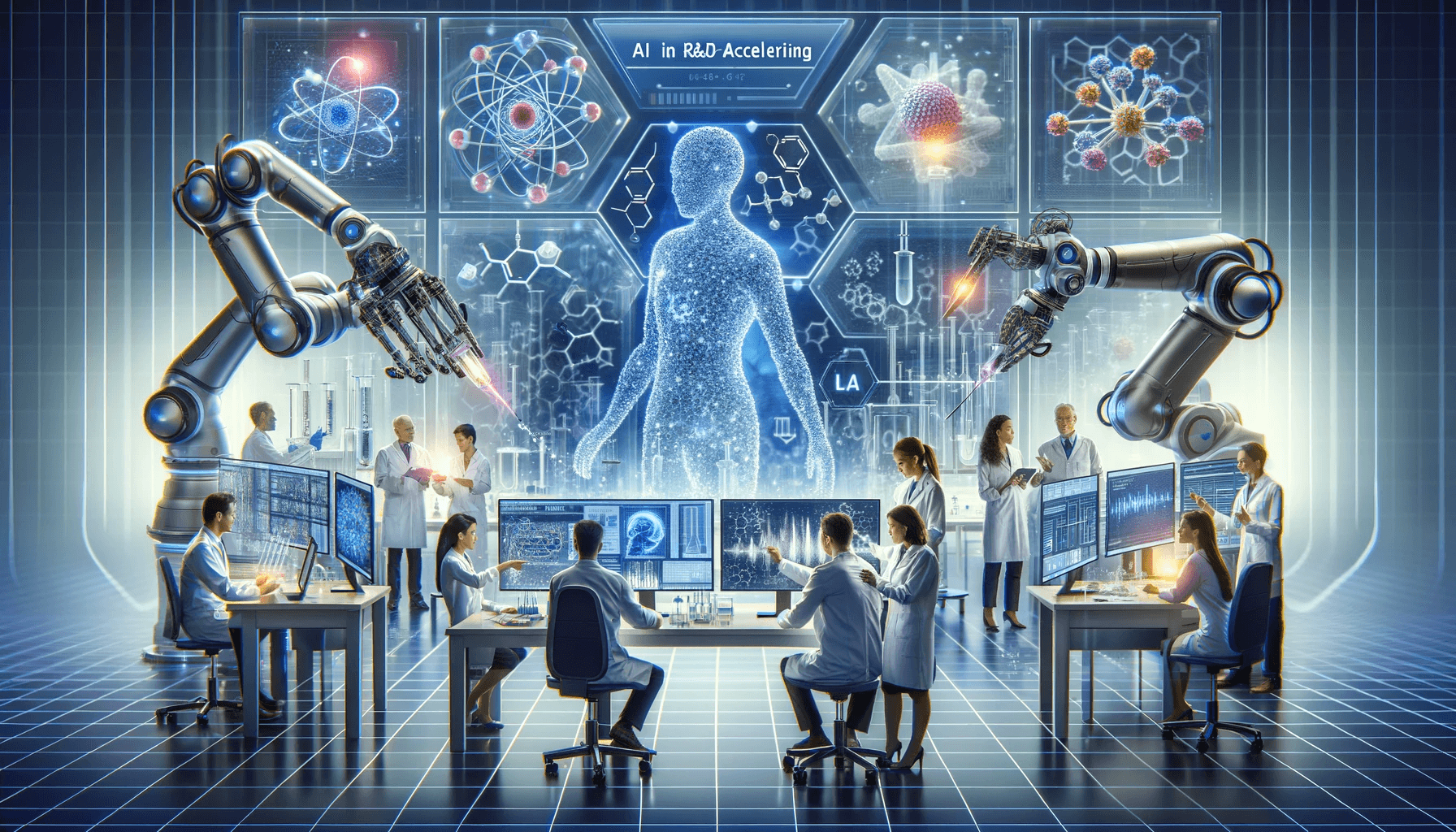
Research and development is one of the most knowledge-intensive and time-consuming activities in the enterprise, and it is also one of the most transformable by AI. The bottlenecks in R&D, synthesising existing knowledge, generating hypotheses, designing experiments, and interpreting results, are all areas where AI can either eliminate repetitive work or provide capabilities that exceed what unaided human researchers can accomplish. AI services and AI solutions are beginning to fundamentally change the speed and cost of discovery in pharmaceutical, materials science, chemical engineering, and technology R&D.
Literature synthesis is one of the most immediate applications. The volume of scientific literature is growing faster than human researchers can read, and the knowledge relevant to any given research question is scattered across thousands of papers, patents, and technical reports. AI systems that can read, understand, and synthesise this literature at scale give researchers access to the full relevant knowledge base rather than the fraction that any individual can cover manually. This reduces redundant research and identifies relevant prior work that would otherwise remain undiscovered.
Hypothesis generation uses machine learning models trained on scientific literature and experimental data to identify relationships that human researchers might not consider, suggesting experimental directions that are statistically supported by existing evidence. In drug discovery, for example, models trained on molecular structure-activity relationships can predict which molecular modifications are most likely to improve the properties of a drug candidate.
Experimental design optimisation applies techniques from machine learning to select the experiments that provide the maximum information about the research question given the constraint of experimental budget. Active learning frameworks that iteratively select the most informative experiments reduce the number of experiments required to reach a conclusion, accelerating the research timeline and reducing cost.
generative AI development services are enabling AI scientific writing tools that help researchers draft manuscripts, generate structured experimental reports, and synthesise results across experimental datasets in natural language.
