

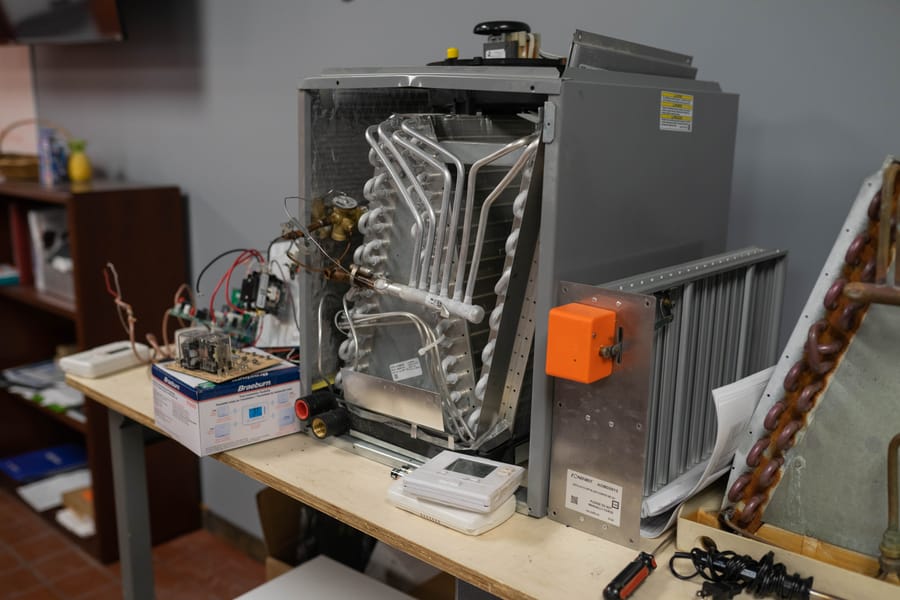
A furnace can provide dependable heating for years, but individual components eventually wear out. When a furnace begins making unusual noises, cycling frequently, producing weak airflow, or failing to heat properly, the underlying issue may involve one worn or damaged part rather than the entire system. Modern furnaces contain numerous components, including igniters, flame sensors, blower motors, control boards, gas valves, limit switches, and heat exchangers.
For homeowners looking into furnace repair Orange County, understanding which components commonly require replacement can make it easier to recognize problems and discuss repair options with an HVAC professional.
Why Furnace Parts Eventually Need Replacement
Furnace components experience repeated heating and cooling cycles, electrical loads, airflow, vibration, and normal mechanical wear. Some parts are relatively small and inexpensive, while others are major components that require substantial labor to replace.
The age of the furnace, maintenance history, operating conditions, airflow, installation quality, and frequency of use can all affect component longevity. Regular maintenance can help identify developing problems before a failed part causes a complete heating interruption.
1. Igniter
The igniter is responsible for initiating combustion in many modern gas furnaces. Instead of using a continuously burning pilot light, modern systems commonly use electronic ignition.
Because igniters repeatedly heat up during furnace operation, they can eventually crack or stop functioning. A failed igniter may cause the furnace to attempt a startup without successfully producing heat. Ignition problems should generally be diagnosed and repaired by a qualified HVAC technician because the system involves gas and electrical components.
2. Flame Sensor
The flame sensor is an important safety component. It confirms that the burner flame has been established after ignition. If the furnace cannot properly detect the flame, the system may shut down the gas supply as part of its safety operation.
A dirty flame sensor does not necessarily mean that replacement is required. Cleaning may resolve some problems, while a damaged or defective sensor may need replacement. Frequent burner shutdowns can therefore warrant professional inspection.
3. Blower Motor
The blower motor moves heated air through the home’s ductwork. When this component becomes worn or fails, homeowners may notice weak airflow, unusual sounds, inconsistent temperatures, or a furnace that operates without effectively distributing warm air.
Blower motor problems can sometimes be related to electrical components or airflow restrictions rather than the motor itself. A technician should determine the actual cause before recommending replacement.
4. Blower Capacitor
Some furnace blower motors use a capacitor to help start and operate the motor. A failing capacitor can cause starting difficulties, weak blower performance, or unusual electrical behavior.
Because symptoms can overlap with motor problems, proper testing is important. Replacing the capacitor when appropriate may restore blower operation without requiring replacement of the entire motor.
5. Control Board
The control board coordinates several furnace functions, including ignition, blower operation, safety controls, and timing. When the board develops an electrical fault, the furnace may behave unpredictably or fail to start.
Control-board replacement requires matching the replacement component to the specific furnace model. Manufacturers recommend using compatible replacement parts and providing the furnace model and serial information when ordering components.
6. Limit Switch
A limit switch helps protect the furnace from excessive temperatures. Restricted airflow caused by issues such as a severely clogged filter, blocked vents, or blower problems can cause furnace temperatures to rise and activate the limit switch.
A defective switch may need replacement, but repeatedly tripping the switch should not simply be treated as a parts problem. The technician should investigate why the furnace is overheating in the first place.
7. Pressure Switch
Many gas furnaces use pressure switches to verify proper operation of the combustion-air and exhaust system. Problems involving the inducer, venting, condensate drainage, or other components can prevent the pressure switch from allowing normal furnace operation.
If a pressure switch is suspected, replacing it without identifying the underlying cause may not solve the problem. Professional diagnosis is especially important because the switch is part of the furnace’s safety and combustion-control system.
8. Inducer Motor
The draft inducer helps move combustion gases through the furnace’s heat exchanger and toward the exhaust system. A failing inducer motor can contribute to startup problems, unusual noises, or pressure-switch faults.
Since the inducer is connected to combustion and exhaust operation, repairs should be handled by a qualified HVAC professional.
9. Gas Valve
The gas valve controls the flow of fuel to the furnace burners. If it becomes defective, the furnace may experience ignition or heating problems.
Gas valve work requires particular care because incorrect installation or adjustment can create serious safety hazards. A qualified technician should test the furnace and confirm that the gas valve is actually responsible before replacement.
10. Heat Exchanger
The heat exchanger is one of the furnace’s most important components. It transfers heat from combustion to the air circulating through the home while keeping combustion gases separated from the household air.
A damaged or cracked heat exchanger can create a serious safety concern. Manufacturers indicate that a cracked heat exchanger may require replacement, and professional inspection is necessary when this problem is suspected.
Because heat-exchanger replacement can involve substantial parts and labor costs, homeowners with older furnaces may need to compare the repair with the potential cost and benefits of replacing the entire furnace.
11. Thermostat
Although the thermostat is not located inside the furnace cabinet, it plays a major role in controlling the heating system. A malfunctioning thermostat can cause inaccurate temperature readings, failure to call for heat, or inconsistent furnace operation.
Before assuming the furnace itself needs repair, technicians may check thermostat settings, wiring, batteries where applicable, and communication between the thermostat and furnace.
12. Air Filter
An air filter is technically a maintenance component rather than a mechanical furnace part, but its condition can have a major effect on furnace operation. A severely clogged filter can restrict airflow, contribute to overheating, and place additional stress on the system.
Manufacturers recommend replacing or cleaning filters according to the furnace and filter manufacturer’s instructions.
Common Warning Signs of a Failing Furnace Component
Homeowners should pay attention to changes in furnace behavior. Possible warning signs include:
- Furnace repeatedly turning on and off
- Weak airflow from supply vents
- Furnace failing to start
- Burners failing to remain lit
- Unusual rattling, squealing, or grinding noises
- Cold air coming from vents when heating is requested
- Unexpected increases in energy consumption
- Repeated electrical breaker trips
- Unusual burning or electrical odors
These symptoms can have multiple possible causes, so they should not automatically be used to identify a specific failed part.
Repair or Replace the Furnace?
Replacing one component can make sense when the furnace is otherwise in good condition. However, a major repair on an older system may require a broader evaluation.
Factors to consider include the furnace’s age, overall condition, repair history, availability of replacement parts, repair cost, efficiency, and expected remaining service life. Manufacturers similarly recommend considering the condition and age of the furnace when deciding between continued repairs and replacement.
Why Professional Diagnosis Matters
Several furnace problems produce similar symptoms. For example, weak heating could result from a clogged filter, blower problem, airflow restriction, control issue, or another component. Replacing a part based only on symptoms can therefore result in unnecessary expense.
A professional diagnostic process can identify the actual source of the problem, test relevant components, inspect safety controls, and determine whether repair or replacement is appropriate. Manufacturer guidance also recommends qualified service for components involving gas, combustion, electrical controls, and heat exchangers.
Final Thoughts
Furnaces contain numerous components that can eventually require cleaning, adjustment, repair, or replacement. Igniters, flame sensors, blower motors, capacitors, control boards, limit switches, pressure switches, inducer motors, gas valves, and heat exchangers are among the components that may be involved when a furnace develops problems.
For homeowners considering furnace repair Orange County, recognizing these common components can provide useful background before speaking with an HVAC technician. The most important step is to identify the actual cause of the malfunction rather than automatically replacing a part based on a symptom.
