

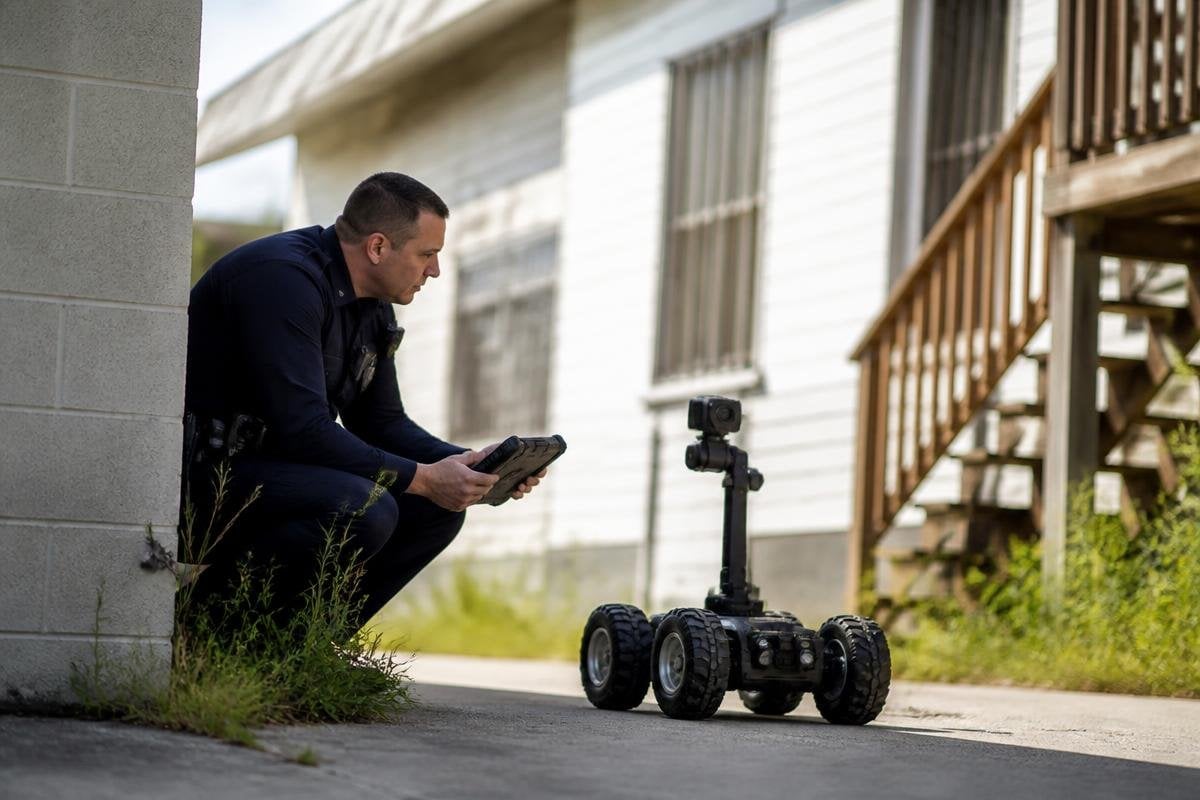
A police robot can carry a camera, move through unsafe rooms, or deliver a phone to someone in danger. The same machine can also collect images, record conversations, or act under police control, so civil-liberty rules need to come before wider use.
Quick read
- Set a clear job for each robot before purchase
- Keep a person responsible for every deployment
- Store less data, for less time, with public records of use
The machine changes the police encounter
A robot can go where an officer may face fire, toxic air, or a hidden weapon. That can lower the chance of injury during a search or rescue task, but the camera still changes what police can see and record.
That difference matters in public places. A robot on a street can observe people who aren’t part of an investigation. If its video stays in a department system, the encounter may continue long after the robot leaves.
The same concern applies inside homes. A remote operator may see rooms, family members, medical items, or private messages on screens. A warrant or other legal authority should state what the robot may inspect, where it may go, and when the recording must stop.
Start with a narrow job
Officials should name the task before they name the robot. “Enter a building after a hazardous-material alert” gives the public a boundary. “Support public safety” does not.
That boundary should cover the robot’s sensors and movement. A camera used to check a doorway raises different questions from a microphone that records everyone nearby. A tracked vehicle that carries a phone has a different risk from a robot fitted with a weapon.
Weapon use needs a separate rule set. Remote control can create distance between a decision and its effects. The operator may be in another room, looking at a delayed video feed, with limited knowledge of what sits behind a door.
I’d keep lethal force outside normal police robot use unless lawmakers set a narrow legal test, public reporting, and direct human approval for each case.
Keep a person answerable
“Human in the loop” sounds useful only when the person can stop the machine.
The department should record who approved the task, who operated the robot, what the robot did, and which system logs remain available for review.
That record needs protection from quiet edits. Access logs can show who viewed stored video or changed a mission setting. If a robot uses software that makes route or target choices, the department should retain the relevant settings and system output for an investigation.
Public records matter here because hidden tools gain wider powers through routine use. Officials can publish the robot’s approved tasks, sensor types, retention period, number of deployments, and any injury or property damage linked to its use.
A camera or microphone can give a police robot reach beyond the task named in a policy. Reporting from Robot24.com puts those sensor choices beside the rules that limit what officers collect and store.
Data limits are civil-liberty limits
A camera records more than the person a police team wants to locate. A microphone may collect voices from bystanders. Location data can show who met whom, even when no crime took place.
A sound policy should limit collection at the robot itself, then limit access after the mission. Blurring faces, blocking audio by default, and deleting footage after a stated period can reduce exposure. Each control needs a written exception process for a real investigation.
Departments also need to test the robot in the places where it will work. Stairs, poor light, reflective glass, crowded corridors, and weak wireless links can change what an operator sees. A system that works in a clean training room may behave differently in an occupied building.
A purchase checklist for police departments
Use these points before signing a contract:
- Name the task: State the exact police job and the places where the robot may operate.
- List the sensors: Record cameras, microphones, thermal tools, location systems, and any weapon-related hardware.
- Set human control: Give a named operator the power to pause or stop movement and record each approval.
- Limit the data: Set storage, access, deletion, and public-reporting rules before deployment.
- Test failure cases: Check lost links, low light, blocked routes, false alerts, and damage to nearby property.
- Review the rule: Set a public date for legal review, complaint review, and a decision to continue, change, or end use.
The next decision is not whether a robot can move through a dangerous place. It is whether the department can show, in public records, where the machine may look, who controls it, and when its data disappears.
